New links
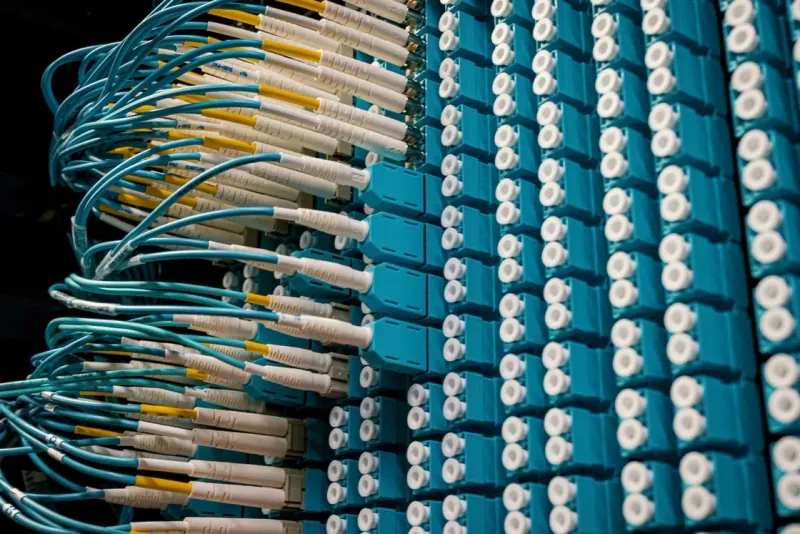
We run fiber between factories, warehouses and field cabinets, then terminate the cable ends in optical distribution frames (ODFs).
FIBER OPTIC INFRASTRUCTURE
Fiber cabling, fusion splicing and termination for factories, warehouses, campuses and buildings. OTDR testing is available when required or requested.


Passive infrastructure and active network devices are selected for the project's technical requirements.


Brand and model selection is assessed separately for every project. This section is not a declaration of official partnership.
We can use fiber to connect remote cameras and network devices in different buildings to the central system. Fiber supports high data capacity over long distances and is not affected by electromagnetic interference. We select cabling and network equipment for the conditions on site.
INSTALLATION AND REPAIR

We run fiber between factories, warehouses and field cabinets, then terminate the cable ends in optical distribution frames (ODFs).
We check the existing link before adding connections for a new building or camera group. Additional cable is installed where necessary.
We repair breaks and connection faults in fiber links, splicing damaged sections or replacing cable where needed.
CHECKS AND HANDOVER
After installation, we check link operation and optical levels. ODFs and ports are labelled to match their destinations on site. If OTDR measurement is requested, it is carried out separately and the report is delivered.
FREQUENTLY ASKED QUESTIONS
Fiber may be suitable between buildings, over long distances, at sites requiring high data capacity or where electromagnetic interference is significant. The appropriate solution is selected after a site survey and a review of existing active equipment.
Single-mode fiber is commonly used for long-distance, high-capacity backbones. Multimode may be suitable for internal links with compatible distances and active equipment. Selection depends on distance, speed, device compatibility and future capacity.
Yes. Existing links with accessible ends can be checked for total loss, connection condition and possible faults. The measurement method is selected for the link length and termination arrangement.
Suitable test equipment can indicate the approximate distance to high loss, a sharp bend, a poor connection or a break. Route information and labels help locate the point that needs attention.
The survey reviews distance, existing ducts or trays, outdoor conditions, excavation needs and termination points. Cable type and protection are selected from these findings.
If suitable fiber counts, ODF capacity and spare ports are planned initially, new connections can be added without disturbing the existing route. Active equipment capacity is also part of this planning.
FREE SITE SURVEY